

Milk Thistle Extract and Its Effect on Liver Fibrosis
Share


Follow Us

Silybin Phytosome® to Prevent Fibrosis
Nicole Cutler, L.Ac.
Regardless of its cause, the progression of liver disease is typically measured by the suppleness, and in turn, the functionality of the liver. Recent studies demonstrate the ability of the milk thistle extract, Silybin Phytosome®, to inhibit the hardening of liver tissue.
Some types of liver disease respond well to prescribed therapy, while others take on a chronic status. In addition to addressing the underlying cause of dysfunction, these chronic liver diseases require vigilance to support liver tissue health. While each disease has a preferred conventional treatment standard, an increasing number of clinicians are predominantly concerned with fibrosis prevention.
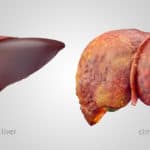
According to the Merck Manual, Fibrosis is an accumulation of fibrous tissue in the liver resulting from an imbalance between production and degradation of the extracellular matrix, and accentuated by the collapse and condensation of preexisting fibers. In more general terms, fibrosis is the hardening of liver tissue, occurring when the liver is impaired and thus, unable to break down fibrous material.
The liver is touted as the most dynamic organ in the body. This title is not only a result of the numerous functions for which it is responsible, but also for its self-restorative capability. The liver is the only organ capable of regenerating parts of itself to repair any sustained damage.
Helping maintain the liver’s texture is akin to supporting this organ’s health. To prevent or inhibit fibrosis, all individuals with liver disease would benefit from an accelerated regeneration of damaged liver tissue.
In Europe, silymarin, the purified extract of the fruits of S. marianum, and its main constituent, silybin, are used to maintain liver health. Worldwide, milk thistle is, deservedly, one of the most commonly prescribed medicinal plants.
S. marianum is a medicinal plant which has been widely used in traditional European medicine for centuries. Commonly known as milk thistle, St. Mary’s thistle and lady’s thistle, it is native to southern Europe, southern Russia, Asia Minor and North Africa. It has been naturalized to North and South America.
Literally hundreds of research studies, mostly conducted in Europe, have confirmed the remarkable ability of milk thistle to protect the liver against virtually all types of damage: from accidental exposure to chemical pollutants, toxic side effects of medications and even the self-inflicted damage from overindulgence of rich food and alcohol.
The United States National Library of Medicine has catalogued more than 300 scientific studies of milk thistle and its active compounds in their medicine database.
The active ingredients of milk thistle are not very bioavailable, especially in their purified or standardized forms. This means one would need to ingest large amounts to experience beneficial effects. Not only impractical, it could be quite expensive.
A recent study published in Digestive and Liver Disease, clearly demonstrates the ability of Silybin Phytosome® to inhibit liver fibrosis. This study confirmed Silybin Phytosome’s® hepatoprotective abilities by proving it counteracts the progression of liver fibrosis typically seen in chronic liver diseases.
On a molecular level, fibrosis is marked by excessive accumulation of extracellular matrix with collagen. The hepatic stellate cells activate this cumulus. In the referenced study, Silybin Phytosome® reduced hepatic stellate cell activation and proliferation. It also significantly reduced the synthesis and deposition of collagen in liver tissue. The authors of this study concluded that Silybin Phytosome® could inhibit liver fibrosis by reducing the synthesis of collagen and by interfering with excessive accumulation of extracellular material.
Additional evidence of silybin’s value in preventing fibrosis is garnered from a 1984 study demonstrating that silybin accelerates the rate of protein synthesis in the liver, leading to faster cell regeneration. A 1997 German study also reported results where silybin reduced the proliferation of hepatic stellate cells by 50 to 75 percent, which again, is highly indicative of its anti-fibrotic effect.
By their very nature, chronic liver diseases are persistent and stubborn to known modern treatments. Chronic liver disease summons our attention to provide every bit of hepatic support possible, until our medical expertise can catch up with us and ameliorate the offending disease. Years of research point to the ability of Silybin Phytosome® to meet this demand, by preventing the damage that liver diseases typically cause.
For more information on supplements containing Silybin Phytosome®, visit LiverSupport.com.