

All About an HCV-Related Condition: Lichen Planus
Share


Follow Us

Affecting between one and two percent of the world’s population, lichen planus is a relatively common dermatological disease. A recurring, chronic, non-allergic, non-infectious, non-contagious disease of the skin, lichen planus has a tendency to relapse after months or years. In between episodes, practicing preventative measures may be able to stop the recurrence of this frustrating condition.
The exact cause of lichen planus is unknown, but it seems to be triggered by stress, genetics, viral infection and allergic reactions to medicines. Although it can be associated with many different health conditions, lichen planus is a common manifestation of Hepatitis C infection. Studies have found that up to 60 percent of people with lichen planus have a history of Hepatitis C. For this reason, it has been recommended that people with lichen planus (especially with elevated liver enzymes) should be tested for the Hepatitis C virus.
About Lichen Planus
Arriving in episodes lasting months to years, lichen planus may begin gradually or quickly. Although no specific cause can be singled out, many possible sources have been implicated in its evolution. Found to occur more frequently in people with a liver dysfunction, lichen planus is now recognized as an extra-hepatic manifestation of the Hepatitis C virus.
Often times, a physician must perform a biopsy of affected tissue to confirm a diagnosis of lichen planus. Unfortunately, several biopsies may be needed at various times, along with blood tests. Clinicians seem to agree that it is common for a yeast infection to be present with lichen planus. In such cases, treating the yeast infection first often improves the severity of lichen planus.
Below are eight characteristics of lichen planus:
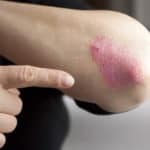
- Appearing as shiny, flat-topped bumps typically with an angular shape, the bumps of lichen planus have a reddish-purplish color and a shiny cast.
- Even though it favors the inside of the wrists and ankles, the lower legs, back and neck, lichen planus can surface anywhere on the skin.
- The mouth, genital region, hair and nails may be lichen planus targets in some individuals.
- Thick patches may occur, especially on the shins.
- Blisters rarely occur.
- Bumps typically appear in areas of trauma.
- About 20 percent of the time, lichen planus of the skin causes minimal symptoms and needs no treatment.
- In many cases, the itching of lichen planus can be constant and intense.
There is no known cure for skin lichen planus, but treatment is often effective in relieving itching and improving the appearance of the rash until it goes away. Since every case of lichen planus is different, no one treatment is sufficient. Physicians may prescribe oral or topical corticosteroids, antihistamines, retinoid drugs or photo-chemotherapy light treatment (PUVA).
Other Locations
Commonly seen with Hepatitis C infection, lichen planus affects other regions of the body such as the mouth, scalp and nails:
- Lichen Planus of the Mouth – Lichen planus lesions can be found on the inside of the cheeks, gums and tongue. Called oral lichen planus, this variety can be more difficult to treat and typically lasts longer than skin lichen planus. About one-third of all people who have oral lichen planus also have skin lichen planus. Typically appearing as patches of fine white lines and dots, oral lichen planus rarely causes symptoms. However, severe forms of oral lichen planus can cause painful sores and ulcers in the mouth.
- Lichen Planus of the Nails – Reported in about 10 percent of lichen planus cases, nails can also be affected by this condition. The majority of toenail or fingernail changes results from damage to the nail matrix, or nail root. Nail changes associated with lichen planus include longitudinal ridging, grooving, splitting, nail thinning and nail loss. In severe cases, the nail may be temporarily or permanently destroyed. Lichen planus of the nails is often resistant to treatment.
- Lichen Planus of the Scalp – Lichen Planopilaris is the specific name given to lichen planus on the scalp, which causes permanent scarring alopecia with inflammation around affected hair follicles. Mostly affecting middle-aged adults as distinct patches of hair loss, treatment includes oral and topical steroids.
Relapse Prevention
Besides avoiding potentially aggravating medications, most clinicians woefully report that there is no surefire way to prevent the recurrence of lichen planus. However, the growing understanding that this skin disorder is an extension of an immune system deficiency offers some clues. In addition, the fact that treating a yeast infection is beneficial for lichen planus, gives us even more useful information.
By keeping your body – both the physical and emotional extensions – as healthy as possible, your risk of a severe lichen planus outbreak is reduced. On top of controlling any possible lichen planus triggers, six suggestions for accomplishing this include:
- Do whatever is necessary to minimize stress.
- Avoid alcohol and tobacco.
- Prioritize getting a full night of restful sleep.
- Choose foods that are digestive system friendly, such as whole grains, vegetables, fruits, high-fiber and items low in saturated fat.
- Reduce peppermint, cinnamon and citrus foods (as these may aggravate lichen planus).
- Fight yeast accumulation with probiotics. According to Israeli researchers, probiotics are immune system modulators. In addition to strengthening the digestive system to combat yeast, probiotics have also demonstrated an improved ratio of immune cell factors.
This potentially frustrating skin disease can really be a challenge, especially while trying to manage chronic Hepatitis C. Since Hepatitis C and lichen planus commonly appear together, looking for solutions to benefit both ailments is the best choice. In addition to working with your physician to minimize any lichen planus triggers, evaluate what you are doing to keep your emotional, digestive and immune systems healthy. Even if you are struggling with an outbreak, instituting the above listed six suggestions will pay off in the long run – by reducing the risk of future lichen planus episodes and by improving your overall physical health.
References:
Amital H., et al., Probiotic Supplementation with Lactobacillus casei (Actimel) Induces a Th1 Response in an Animal Model of Antiphospholipid Syndrome, Annals of the New York Academy of Sciences, September 2007.
http://autoimmune-skin-disorders.suite101.com, Lichen Planus: A Common Skin Rash in Autoimmune Disorders, Elaine Moore, April 2007.
http://hcvadvocate.org, Extrahepatic Manifestations: Lichen Planus, Alan Franciscus, Hepatitis C Support Project, 2007.
Prabhu Smitha, Pavithran K, Sobhanadevi G, Lichen planus and hepatitis c virus (HCV) – Is there an association? A serological study of 65 cases, Indian Journal of Dermatology, Venereology and Leprology, 2002.
www.aafp.org, Lichen Planus, Rajani Katta, MD, American Family Physician, 2007.
www.aocd.org, Lichen Planus, American Osteopathic College of Dermatology, 2007.
www.lichenplanus.com, What you Need to Know About Lichen Planus, Dr. Rajesh Shah, 2007.