

Appetite Hormone Could Inhibit HCV-Related Fibrosis
Share


Follow Us

A hormone normally found in the stomach is proving to be of great interest to the Hepatitis C community. Known as an appetite-stimulating hormone, ghrelin is regarded with disdain by dieters and overweight individuals. Interestingly, ghrelin has demonstrated the ability to minimize one of the greatest hazards of the Hepatitis C virus – liver fibrosis.
About Ghrelin
Made in the stomach, ghrelin levels rise when people are hungry and they wane after a meal. People who get injections of this hormone gorge themselves, and those suffering from a rare disease that keeps ghrelin levels unusually high tend to be obese overeaters. Not surprisingly, researchers seeking to help people shed excessive weight have been actively trying to block ghrelin since its recognition in the late ’90s. Of course, blocking an essential hormone carries unknown risks to our health. For people with chronic liver disease, researchers from Spain have uncovered a valid reason to treasure ghrelin – and be weary of blocking this curious hormone.
Fibrosis
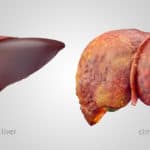
One of the few organs that can regenerate, the liver has the remarkable ability to recover from minor injuries by healing itself. Unfortunately, this regenerative capacity can’t keep up with diseases that cause significant liver damage. For those individuals living with chronic Hepatitis C (or any other kind of chronic liver disease), progressive scarring of liver tissue is a major concern.
Otherwise known as fibrosis, continual liver scarring can lead to cirrhosis – which ultimately renders the liver unable to function. Over 27,000 Americans die from cirrhosis annually, making it the country’s third leading cause of death for people between the ages of 25 and 59, and the seventh leading cause of death overall. Needless to say, strategies to prevent fibrosis from worsening to cirrhosis are in high demand. Despite this need, there are currently no approved anti-fibrotic therapies on the market.
Ghrelin Fights Fibrosis
Published in the March 2010 edition of Hepatology, researchers from Spain’s Hospital Clinic of Barcelona discovered that ghrelin has the potential of being a novel, anti-fibrotic therapy. According to Dr. Ramón Bataller, part of the team involved in the Barcelona study, “Our aim was to determine if recombinant ghrelin could regulate the formation of fibrous tissue associated with chronic liver damage.”
The research team found the following:
- In animal models, ghrelin reduced the amount of fibrogenic cells by 25 percent.
- Participants with chronic Hepatitis C and alcoholic hepatitis had significantly lower ghrelin levels than did healthy individuals.
The researchers concluded that ghrelin inhibits the development of liver fibrosis in both animals and humans.
Insulin Resistance
The link connecting this appetite-stimulating hormone to its protection against liver fibrosis remains unclear. However, research from 2003 may be on the right track. According to an Italian study published in the Journal of Clinical Endocrinology & Metabolism, insulin resistance may be the bridge between ghrelin levels and liver damage. In individuals with NAFLD (non-alcoholic fatty liver disease), insulin resistance is believed to be relatively independent of obesity. After evaluating subjects with NAFLD, the Italian researchers found that insulin resistance plays a primary role in controlling ghrelin levels.
Insulin resistance is a decreased ability to respond to the effects of insulin, a hormone that helps transport glucose into the body’s cells for making energy. Since cells need glucose to survive, the body compensates for insulin resistance by producing additional amounts of this hormone. Although not a disease or specific diagnosis, insulin resistance has a ripple effect on the body and is associated with heart disease, polycystic ovarian syndrome, Type 2 diabetes, obesity and NAFLD.
Thanks to Bataller’s team, the connection between ghrelin and fibrosis could help prevent liver scarring in people who are most prone. Future studies are likely going to take insulin resistance into consideration while determining the safety and efficacy of ghrelin in people with chronic liver disease. If this hormone continues to prove its value to the liver, efforts to block ghrelin for weight loss purposes will likely lose steam. On the other hand, those with Hepatitis C could benefit by finally having a therapeutic option to prevent the progression of liver scarring.
References:
http://cordis.europa.eu/fetch?CALLER=EN_NEWS&ACTION=D&SESSION=&RCN=31823, Body’s own hormone may be liver disease’s worst foe, Retrieved March 15, 2010, CORDIS Services, 2010.
http://jcem.endojournals.org/cgi/content/abstract/88/12/5674, Low Ghrelin Concentrations in Nonalcoholic Fatty Liver Disease Are Related to Insulin Resistance, G.Marchesini, et al, Retrieved March 19, 2010, Journal of Clinical Endocrinology & Metabolism, August 2003.
http://www.cbsnews.com/stories/2003/03/11/60II/main543614.shtml, The Hunger Hormone, Carol Kopp, Retrieved March 15, 2010, CBS Interactive Inc., 2010.
http://www.eurekalert.org/pub_releases/2010-03/w-gml022510.php, Ghrelin mitigates liver fibrosis in animal models; regulates human fibrosis, Retrieved March 15, 2010, EurekAlert, 2010.
http://www.healthsquare.com/fgpd/fg4ch20.htm, Dealing with Liver Disease, Retrieved March 19, 2010, The HealthCentral Network, Inc., 2010.
http://www.labtestsonline.org/understanding/conditions/insulin_resistance.html, Insulin Resistance, Retrieved March 19, 2010, American Association for Clinical Chemistry, 2010.
http://www.ncbi.nlm.nih.gov/pubmed/20077562, Ghrelin attenuates hepatocellular injury and liver fibrogenesis in rodents and influences fibrosis progression in humans, Moreno M, et al, Retrieved March 15, 2010, Hepatology, March 2010.
http://www.newscientist.com/article/dn13845-stomach-hormone-turns-hungry-people-into-junkies.html, Stomach hormone turns hungry people into junkies, Ewen Callaway, Retrieved March 18, 2010, Reed Business Information Ltd, 2010.